Hilltop Veterinary Clinic

780-778-2662

Open mobile navigation
  • Home
  • Patient Resources
    • Small Animal
      • Nutrition
      • Breeding and Whelping
      • Kitten Info
      • Puppy Info
      • Geriatric Care
      • Surgical Info
      • Tattoos and Microchips
      • Euthanasia and Pet Memorials
      • Travelling with Pets
    • Equine
      • Wellness Care
      • Coggins Testing and Export
      • Referral Info
      • Euthanasia
      • Resources
      • Emergency Services
    • Bovine
      • Farm Services
      • VCPR and Herd Health
      • Vaccinations and Deworming
      • Exportation and EU Certification
      • Bovine Resources
    • Small Ruminant and Camelid
      • Herd/Flock Health and VCPR
      • Vaccinations
      • Deworming
    • Exotic and Pocket Pets
      • Euthanasia and Pet Memorials
      • Referral Info
      • Resources
    • What to Expect
    • Veterinary Resources
    • Payment Options
  • About Us
    • Clinic Tour
    • Meet The Staff
    • Service Overview
    • No-Show Policy
  • Services
    • Small Animal
      • Spays and Neuters
      • Vaccinations
      • Soft Tissue Surgery
      • Orthopedic Surgery
      • Dentistry
      • Laser Therapy
    • Bovine
    • Equine
    • Onsite diagnostics
    • Small Ruminant and Camelid
    • Cervid and Bison
    • Other Species
    • Emergency Services
  • Contact Us
  • Veterinary Topics
    • Pet Health
      • Chronic Conditions
      • Digestive and Oral Health
      • Diseases and Viruses
      • Pests and Parasites
      • Orthopedics
    • Today's Veterinarian
    • Choosing Your Pet
      • Finding Your Pet
      • Cats
      • Dogs
      • Exotics
        • Amphibians
        • Birds
        • Reptiles
          • Lizards
          • Turtles
      • Small Mammals
        • Ferrets
        • Rabbits
        • Domesticated Animals
          • Prairie Dogs
        • Pocket Pets
          • Chinchillas
          • Guinea Pigs
          • Hamsters
          • Hedgehogs
          • Rats
      • Livestock
        • Cows
        • Donkeys, Horses & Mules
        • Goats
        • Pigs
        • Poultry
        • Sheep
    • Living With Your Pet
      • Bringing Your Pet Home
      • Children and Pets
      • Providing Care
      • Travel
      • Saying Goodbye
    • Newsletter Library
      • Cats
      • Tips for Pet Owners
      • Behavior & Training
      • Fleas & Parasites
      • Keeping Pets Healthy
      • Recognizing Illness
      • Nutrition & Food
      • Pet Dangers
      • Seasonal Topics
      • Visiting the Vet
      • Equine
      • Newsletter Archive
        • Fun with Pets
        • Unbelievable Pets
    • Video Newsroom
      • Health Topics
      • Technology and Science
      • Other Interests
    • Newsletter Library
    • Client Survey
    • Pets4Kids
  • Home >
  • Articles >
  • Newsletter Library >
  • Recognizing Illness >
  • Canine Hip Dysplasia: Causes & Treatment

Canine Hip Dysplasia: Causes & Treatment

  • Created in Newsletter Library, Recognizing Illness
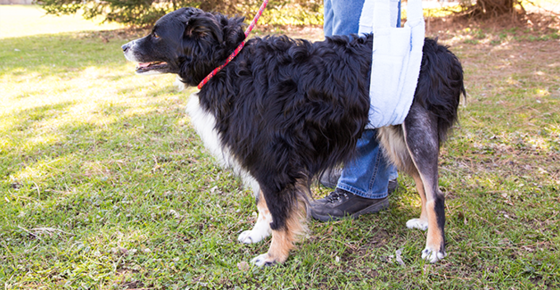
Image of a dog using a body sling to help it stand.

Canine hip dysplasia is the abnormal formation of the hip joint and one of the leading causes of rear leg lameness in dogs. Hip dysplasia is most prevalent in larger breed dogs, especially German Shepherds, Golden Retrievers, Labradors, Saint Bernards and Rottweilers. On the other hand, hip dysplasia is uncommon in the Doberman, Great Dane, and Greyhound. The condition can occur in small and medium sized dogs as well, for instance, the Cavalier King Charles Spaniel, Pug, and the Sussex and Clumber Spaniel. This condition affects male and female dogs equally. With hip dysplasia being a common condition in dogs, it is important that dog owners understand the symptoms, causes and treatment options.

Hip dysplasia is caused primarily by genetics, although other factors also play a role. Studies have shown that feeding a puppy too much of a high-calorie diet can cause the puppy to grow too quickly, which then increases the risk for hip problems.

The earliest symptoms can occur between four months and one year, although the signs may not be apparent until the dog is middle-aged or older. These symptoms include pain when walking, a swaying gait or limp, “bunny hopping” when running, and, most commonly, difficulty getting up due to pain in the hindquarters. Hip dysplasia is not an “all or nothing” condition, but occurs on a spectrum determined by the amount of hip dysfunction.

In a normal hip joint, the head of the femur (thigh bone) fits snugly into the socket. Dogs with mild dysplasia have a mild separation between the ball and hip socket. Dogs with moderate dysplasia will have more separation, which causes wear and tear leading to degenerative arthritis. Dogs classified as severely dysplastic have a full separation of the femur from the hip socket which leads to severe arthritis.

Diagnosing hip dysplasia requires x-rays of the hips; this almost always requires sedation or anesthesia for proper positioning. This can be done by your veterinarian. There are three methods of getting the hip x-rays: OFA, Penn-Hip, and DLS. These are just different methods of positioning and measuring. With OFA and Penn-Hip you can also send the hip films to a radiologist for an official evaluation and certification. People who want to breed their dog often do this; if you breed two dogs with good hips you are more likely to get puppies with good hips. OFA will evaluate your dog at any age, but the dog needs to be at least 24 months of age to be certified. DLS is a new system recently developed by Cornell University.

Treatment for hip dysplasia depends on the severity of the disease, the age of the dog, and what expense the owner is willing to incur. Some young dogs may be helped by a surgery called a triple pelvic osteotomy (TPO). Especially in small to medium dogs, another effective surgical option is an FHO (femoral head ostectomy) where the head of the femur is removed. On the other hand, the dog with a severely arthritic hip may be helped only by surgery to implant an artificial hip. Most cases will need pain meds, anti-inflammatory drugs, and glucosamine. Other treatment modalities are laser therapy, physical therapy, water treadmill, and acupuncture.

Source:

Baker Institute for Animal Health, Cornell University
  • Pet Health
    • Chronic Conditions
    • Digestive and Oral Health
    • Diseases and Viruses
    • Pests and Parasites
    • Orthopedics
  • Today's Veterinarian
  • Choosing Your Pet
    • Finding Your Pet
    • Cats
    • Dogs
    • Exotics
      • Amphibians
      • Birds
      • Reptiles
        • Lizards
        • Turtles
    • Small Mammals
      • Ferrets
      • Rabbits
      • Domesticated Animals
        • Prairie Dogs
      • Pocket Pets
        • Chinchillas
        • Guinea Pigs
        • Hamsters
        • Hedgehogs
        • Rats
    • Livestock
      • Cows
      • Donkeys, Horses & Mules
      • Goats
      • Pigs
      • Poultry
      • Sheep
  • Living With Your Pet
    • Bringing Your Pet Home
    • Children and Pets
    • Providing Care
    • Travel
    • Saying Goodbye
  • Newsletter Library
    • Cats
    • Tips for Pet Owners
    • Behavior & Training
    • Fleas & Parasites
    • Keeping Pets Healthy
    • Recognizing Illness
    • Nutrition & Food
    • Pet Dangers
    • Seasonal Topics
    • Visiting the Vet
    • Equine
    • Newsletter Archive
      • Fun with Pets
      • Unbelievable Pets
  • Video Newsroom
    • Health Topics
    • Technology and Science
    • Other Interests
  • Newsletter Library
  • Client Survey
  • Pets4Kids

Covid-19 Information

Featured Links

Click to find out more

  • About Us

    Hilltop Veterinary Clinic is proud to serve the Whitecourt Alberta area for everything pet related. Our veterinary clinic and animal hospital is run by licensed, experienced veterinarians.

  • Facebook

    Find us on Facebook!

  • Contact Us

    Please contact with any questions or to request an appointment.

Office Hours

Our Regular Schedule

Monday:

8:30 am-5:00 pm

Tuesday:

8:30 am-5:00 pm

Wednesday:

8:30 am-5:00 pm

Thursday:

8:30 am-5:00 pm

Friday:

8:30 am-5:00 pm

Saturday:

Mayerthorpe Office Only

9:00 am-1:00 pm

Sunday:

Closed

Location

Find us on the map

Featured Articles

Read about interesting topics

  • March Newsletter: How to Keep Your Cat Safe When Outdoors

    Wondering how your cat can safely spend time outdoors? ...

    Read More
  • March Newsletter: How to Choose Safe Blankets for Pets

    Do you know how to pick a safe blanket for your pet? ...

    Read More
  • February Newsletter: How to Reduce Dental Anxiety in Pets

    Does your pet hate toothbrushing? These tips could reduce dental anxiety. ...

    Read More
  • February Newsletter: How to Safely Change Your Cat’s Food

    Buying a new food for your cat? Find out how to switch foods safely. ...

    Read More
  • January Newsletter: Signs Your Pet Needs a Wellness Exam

    Does your pet need a wellness exam? ...

    Read More
  • January Newsletter: How Your Veterinarian Can Help If Your Pet Ingests Something Toxic

    Has your pet eaten something it shouldn't have? Find out how your vet can help. ...

    Read More
  • December Newsletter: Signs Your Pet Needs a Professional Cleaning

    Do you know when your pet needs a professional cleaning? ...

    Read More
  • December Newsletter: Simple Ways to Keep Your Home Flea-Free for Your Pet’s Well-being

    Never want to see another flea again? Try these tips for a flea-free home. ...

    Read More
  • November Newsletter: The Importance of Bloodwork for Your Pet’s Health

    Wondering if your pet really needs bloodwork? Find out the benefits of blood tests for your furry friend. ...

    Read More
  • November Newsletter: Turkey Day Tips for Pet Owners

    Don't forget about your pet when making Turkey Day preparations. ...

    Read More

Newsletter Signup

No social media links found. Please configure it
  • Copyright © 2026 MH Sub I, LLC dba iMatrix.
  • Admin Log In
  • Site Map