Hilltop Veterinary Clinic

780-778-2662

Open mobile navigation
  • Home
  • Patient Resources
    • Small Animal
      • Nutrition
      • Breeding and Whelping
      • Kitten Info
      • Puppy Info
      • Geriatric Care
      • Surgical Info
      • Tattoos and Microchips
      • Euthanasia and Pet Memorials
      • Travelling with Pets
    • Equine
      • Wellness Care
      • Coggins Testing and Export
      • Referral Info
      • Euthanasia
      • Resources
      • Emergency Services
    • Bovine
      • Farm Services
      • VCPR and Herd Health
      • Vaccinations and Deworming
      • Exportation and EU Certification
      • Bovine Resources
    • Small Ruminant and Camelid
      • Herd/Flock Health and VCPR
      • Vaccinations
      • Deworming
    • Exotic and Pocket Pets
      • Euthanasia and Pet Memorials
      • Referral Info
      • Resources
    • What to Expect
    • Veterinary Resources
    • Payment Options
  • About Us
    • Clinic Tour
    • Meet The Staff
    • Service Overview
    • No-Show Policy
  • Services
    • Small Animal
      • Spays and Neuters
      • Vaccinations
      • Soft Tissue Surgery
      • Orthopedic Surgery
      • Dentistry
      • Laser Therapy
    • Bovine
    • Equine
    • Onsite diagnostics
    • Small Ruminant and Camelid
    • Cervid and Bison
    • Other Species
    • Emergency Services
  • Contact Us
  • Veterinary Topics
    • Pet Health
      • Chronic Conditions
      • Digestive and Oral Health
      • Diseases and Viruses
      • Pests and Parasites
      • Orthopedics
    • Today's Veterinarian
    • Choosing Your Pet
      • Finding Your Pet
      • Cats
      • Dogs
      • Exotics
        • Amphibians
        • Birds
        • Reptiles
          • Lizards
          • Turtles
      • Small Mammals
        • Ferrets
        • Rabbits
        • Domesticated Animals
          • Prairie Dogs
        • Pocket Pets
          • Chinchillas
          • Guinea Pigs
          • Hamsters
          • Hedgehogs
          • Rats
      • Livestock
        • Cows
        • Donkeys, Horses & Mules
        • Goats
        • Pigs
        • Poultry
        • Sheep
    • Living With Your Pet
      • Bringing Your Pet Home
      • Children and Pets
      • Providing Care
      • Travel
      • Saying Goodbye
    • Newsletter Library
      • Cats
      • Tips for Pet Owners
      • Behavior & Training
      • Fleas & Parasites
      • Keeping Pets Healthy
      • Recognizing Illness
      • Nutrition & Food
      • Pet Dangers
      • Seasonal Topics
      • Visiting the Vet
      • Equine
      • Newsletter Archive
        • Fun with Pets
        • Unbelievable Pets
    • Video Newsroom
      • Health Topics
      • Technology and Science
      • Other Interests
    • Newsletter Library
    • Client Survey
    • Pets4Kids
  • Home >
  • Articles >
  • Newsletter Library >
  • Cats >
  • Is a Cat Enclosure Right for Your Cat?

Is a Cat Enclosure Right for Your Cat?

  • Created in Newsletter Library, Cats
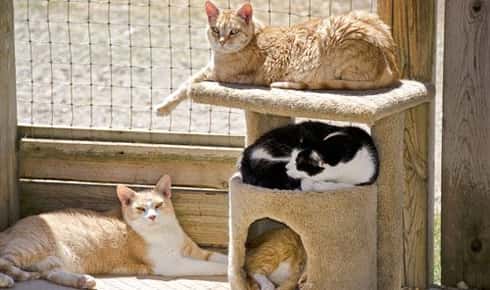
Cat in a cat enclosure outside.

A cat enclosure offers the perfect way for your favorite feline to enjoy a little outdoor time without being subjected to the dangers of the real world. Before you make the decision about adding an enclosure to your property, consider these facts.

Free Access to the Outdoors Can Decrease a Cat's Lifespan

Free roaming cats are subject to many dangers, including:

  • Car accidents
  • Injury or death at the hands of cruel people
  • Attacks by other animals
  • Communicable disease, such as feline leukemia, feline AIDS, feline distemper, and upper respiratory infections
  • Poisoning from anti-freeze and intentional poisoning
  • Parasites, including ticks, fleas, ringworm, tape worms, and ear mites.

Adding an enclosure protects your pet from these dangers and helps ensure that you have many years to spend with your furry friend.

Cats Are Adaptable

If your cat currently spends a lot of time outdoors unsupervised, you may be concerned that it will not react well to being deprived of the ability to come and go freely. Fortunately, most cats are very adaptable and adjust to life indoors within a few months. Building an enclosure gives your pet plenty of time to spend outdoors without any of the risks.

Enclosures Provide Exercise and Stimulation for Indoor Cats

Keeping your indoor cat stimulated can be a challenge at times. An outdoor cat enclosure offers the perfect spot for hours of bird or squirrel watching and helps your cat stay active and engaged.

3 Tips for Indoor Cat Enrichment

Keeping your indoor cat happy and stimulated is simple when you follow these three enrichment tips.

  1. Offer a Selection of Toys. Provide plenty of toys to keep your pet busy. Cats love toys that offer ample opportunity for chasing and pouncing, such as lasers, fishing poles, battery-operated mice, or other types of toys that move on their own. Since lasers and fishing poles require your involvement, they help strengthen your relationship with your furry friend.
  2. Encourage Your Climber. Cats enjoy climbing and viewing their surroundings from the highest spot in the room. Exploring and climbing not only helps your cat get adequate exercise, but also keeps her active and alert. Add cat condos and trees to your home to encourage climbing, or build your own cat climbing system with leftover lumber from your cat enclosure project.
  3. Bring Home a Friend. Everything is more fun when you have a friend along, whether you are a human or a feline. Life can get boring for an only cat, particularly if you are at school or work for long hours. When you add a second cat to your family, your pets will fill the hours that you are away playing, chasing, and grooming each other.

Things to Think About When Building or Buying a Cat Enclosure

  • Space. How much space do you have to devote to the enclosure? Some cat owners screen in their patios to create large feline-friendly spaces, while others buy long cat tunnels that allow their pets to safely explore their yards. Keep in mind that your cat may become bored or frustrated if your enclosure is really just a glorified cage. Although enclosures can be built or bought in varying sizes, your cat's enclosure should be big enough to allow him to move, turn around, and jump freely.
  • Type. Both freestanding and attached enclosures are good choices. Attached enclosures are added to windows, doors, or patios and can be accessed through pet doors. Freestanding structures can be permanent or can be erected and dismantled every time your cat goes outdoors.
  • Comfort. Your cat enclosure should be a comfortable space for your cat. Include a shaded area to provide relief from the sun, and create a few comfortable lounging spots. If your enclosure is tall, add a few climbing spaces or a cat condo. Of course, you'll want to include a litter box, food, water, and toys.
  • Quality Construction. If you build your own enclosure, make sure it can handle the elements and plenty of pouncing, jumping, and running. Screens and barriers should be strong enough to keep your cats in and other animals out. If you buy an enclosure, make sure it's sturdy enough for everyday use and cannot be easily toppled.

Do you have a question about your cat's health or behavior? Call us and let us know how we can help you and your pet.

Sources:

CatTime.com: Debating Keeping Your Cat Indoors or Letting Them Outside Sometimes?

http://cattime.com/cat-facts/health/78-indoor-outdoor-cats

The Marin Humane Society: Cat Enclosures

https://www.marinhumane.org/oh-behave/cats/enclosures/

American Humane Association: Indoor Cats vs. Outdoor Cats

http://www.americanhumane.org/animals/adoption-pet-care/caring-for-your-pet/indoor-cats-vs-outdoor-cats.html

WebMD: Should You Have an Indoor Cat or Outdoor Cat?

http://pets.webmd.com/cats/features/should-you-have-an-indoor-cat-or-an-outdoor-cat

  • Pet Health
    • Chronic Conditions
    • Digestive and Oral Health
    • Diseases and Viruses
    • Pests and Parasites
    • Orthopedics
  • Today's Veterinarian
  • Choosing Your Pet
    • Finding Your Pet
    • Cats
    • Dogs
    • Exotics
      • Amphibians
      • Birds
      • Reptiles
        • Lizards
        • Turtles
    • Small Mammals
      • Ferrets
      • Rabbits
      • Domesticated Animals
        • Prairie Dogs
      • Pocket Pets
        • Chinchillas
        • Guinea Pigs
        • Hamsters
        • Hedgehogs
        • Rats
    • Livestock
      • Cows
      • Donkeys, Horses & Mules
      • Goats
      • Pigs
      • Poultry
      • Sheep
  • Living With Your Pet
    • Bringing Your Pet Home
    • Children and Pets
    • Providing Care
    • Travel
    • Saying Goodbye
  • Newsletter Library
    • Cats
    • Tips for Pet Owners
    • Behavior & Training
    • Fleas & Parasites
    • Keeping Pets Healthy
    • Recognizing Illness
    • Nutrition & Food
    • Pet Dangers
    • Seasonal Topics
    • Visiting the Vet
    • Equine
    • Newsletter Archive
      • Fun with Pets
      • Unbelievable Pets
  • Video Newsroom
    • Health Topics
    • Technology and Science
    • Other Interests
  • Newsletter Library
  • Client Survey
  • Pets4Kids

Covid-19 Information

Featured Links

Click to find out more

  • About Us

    Hilltop Veterinary Clinic is proud to serve the Whitecourt Alberta area for everything pet related. Our veterinary clinic and animal hospital is run by licensed, experienced veterinarians.

  • Facebook

    Find us on Facebook!

  • Contact Us

    Please contact with any questions or to request an appointment.

Office Hours

Our Regular Schedule

Monday:

8:30 am-5:00 pm

Tuesday:

8:30 am-5:00 pm

Wednesday:

8:30 am-5:00 pm

Thursday:

8:30 am-5:00 pm

Friday:

8:30 am-5:00 pm

Saturday:

Mayerthorpe Office Only

9:00 am-1:00 pm

Sunday:

Closed

Location

Find us on the map

Featured Articles

Read about interesting topics

  • March Newsletter: How to Keep Your Cat Safe When Outdoors

    Wondering how your cat can safely spend time outdoors? ...

    Read More
  • March Newsletter: How to Choose Safe Blankets for Pets

    Do you know how to pick a safe blanket for your pet? ...

    Read More
  • February Newsletter: How to Reduce Dental Anxiety in Pets

    Does your pet hate toothbrushing? These tips could reduce dental anxiety. ...

    Read More
  • February Newsletter: How to Safely Change Your Cat’s Food

    Buying a new food for your cat? Find out how to switch foods safely. ...

    Read More
  • January Newsletter: Signs Your Pet Needs a Wellness Exam

    Does your pet need a wellness exam? ...

    Read More
  • January Newsletter: How Your Veterinarian Can Help If Your Pet Ingests Something Toxic

    Has your pet eaten something it shouldn't have? Find out how your vet can help. ...

    Read More
  • December Newsletter: Signs Your Pet Needs a Professional Cleaning

    Do you know when your pet needs a professional cleaning? ...

    Read More
  • December Newsletter: Simple Ways to Keep Your Home Flea-Free for Your Pet’s Well-being

    Never want to see another flea again? Try these tips for a flea-free home. ...

    Read More
  • November Newsletter: The Importance of Bloodwork for Your Pet’s Health

    Wondering if your pet really needs bloodwork? Find out the benefits of blood tests for your furry friend. ...

    Read More
  • November Newsletter: Turkey Day Tips for Pet Owners

    Don't forget about your pet when making Turkey Day preparations. ...

    Read More

Newsletter Signup

No social media links found. Please configure it
  • Copyright © 2026 MH Sub I, LLC dba iMatrix.
  • Admin Log In
  • Site Map