Hilltop Veterinary Clinic

780-778-2662

Open mobile navigation
  • Home
  • Patient Resources
    • Small Animal
      • Nutrition
      • Breeding and Whelping
      • Kitten Info
      • Puppy Info
      • Geriatric Care
      • Surgical Info
      • Tattoos and Microchips
      • Euthanasia and Pet Memorials
      • Travelling with Pets
    • Equine
      • Wellness Care
      • Coggins Testing and Export
      • Referral Info
      • Euthanasia
      • Resources
      • Emergency Services
    • Bovine
      • Farm Services
      • VCPR and Herd Health
      • Vaccinations and Deworming
      • Exportation and EU Certification
      • Bovine Resources
    • Small Ruminant and Camelid
      • Herd/Flock Health and VCPR
      • Vaccinations
      • Deworming
    • Exotic and Pocket Pets
      • Euthanasia and Pet Memorials
      • Referral Info
      • Resources
    • What to Expect
    • Veterinary Resources
    • Payment Options
  • About Us
    • Clinic Tour
    • Meet The Staff
    • Service Overview
    • No-Show Policy
  • Services
    • Small Animal
      • Spays and Neuters
      • Vaccinations
      • Soft Tissue Surgery
      • Orthopedic Surgery
      • Dentistry
      • Laser Therapy
    • Bovine
    • Equine
    • Onsite diagnostics
    • Small Ruminant and Camelid
    • Cervid and Bison
    • Other Species
    • Emergency Services
  • Contact Us
  • Veterinary Topics
    • Pet Health
      • Chronic Conditions
      • Digestive and Oral Health
      • Diseases and Viruses
      • Pests and Parasites
      • Orthopedics
    • Today's Veterinarian
    • Choosing Your Pet
      • Finding Your Pet
      • Cats
      • Dogs
      • Exotics
        • Amphibians
        • Birds
        • Reptiles
          • Lizards
          • Turtles
      • Small Mammals
        • Ferrets
        • Rabbits
        • Domesticated Animals
          • Prairie Dogs
        • Pocket Pets
          • Chinchillas
          • Guinea Pigs
          • Hamsters
          • Hedgehogs
          • Rats
      • Livestock
        • Cows
        • Donkeys, Horses & Mules
        • Goats
        • Pigs
        • Poultry
        • Sheep
    • Living With Your Pet
      • Bringing Your Pet Home
      • Children and Pets
      • Providing Care
      • Travel
      • Saying Goodbye
    • Newsletter Library
      • Cats
      • Tips for Pet Owners
      • Behavior & Training
      • Fleas & Parasites
      • Keeping Pets Healthy
      • Recognizing Illness
      • Nutrition & Food
      • Pet Dangers
      • Seasonal Topics
      • Visiting the Vet
      • Equine
      • Newsletter Archive
        • Fun with Pets
        • Unbelievable Pets
    • Video Newsroom
      • Health Topics
      • Technology and Science
      • Other Interests
    • Newsletter Library
    • Client Survey
    • Pets4Kids
  • Home >
  • Articles >
  • Newsletter Library >
  • Seasonal Topics >
  • Summer Paw Care For Hot Pavement and Exercise Outside

Summer Paw Care For Hot Pavement and Exercise Outside

  • Created in Newsletter Library, Seasonal Topics

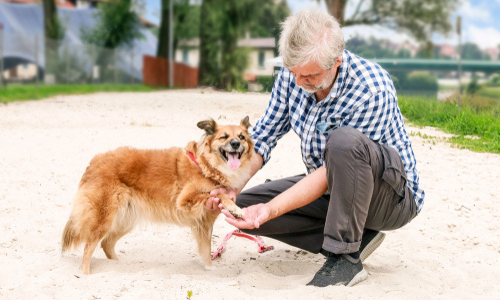
Owner checking dog's paw on the beach

How to Keep Your Pets Safe This Summer

Your cat or dog probably enjoys the beautiful summer weather just as much as you do. Unfortunately, your pet's chance of developing a heat-related illness or injury rises with the temperature. Whether your furry friend enjoys romps in the park with you or never ventures beyond your backyard, these tips can help him or her stay safe this summer.

Limit Outdoor Time on Hot, Humid Days

Heat and humidity levels affect your pet's health and comfort. While some animals tolerate heat and humidity fairly well, others can quickly become overheated. Reduce the risk of heatstroke by restricting outdoor play time to the cooler morning or evening hours.

If there's an excessive heat warning for your area, don't let your pet spend hours outside in the hot sun. Your dog or cat will be much comfortable indoors where heat and humidity can be controlled by air-conditioning and fans.

When your pet does spend time outdoors, provide plenty of fresh, cool water and a shady, well-ventilated resting place. Dog houses may offer shade, but they trap the heat and quickly become uncomfortably hot.

Puppies, kittens, older pets, pets with health conditions, or pets that have short muzzles might be more affected by heat and humidity and may experience heat exhaustion or heatstroke symptoms sooner than other pets.

Monitor your pet carefully for signs of heatstroke. They include:

  • Heavy Panting
  • Rapid Heart Rate
  • Weakness
  • Dizziness
  • Dry Nose
  • Sunken Eyes
  • Lack of Coordination
  • Change in Tongue Color
  • Drooling
  • Vomiting or Diarrhea

Bring your pet inside immediately if you notice these symptoms. Use a washcloth soaked in cool, not cold, water to ease heatstroke symptoms, and call your pet's veterinarian immediately.

Protect Your Pet's Paws

Concrete, sand, asphalt, wood, and metal surfaces become unbearably hot after just a few hours of direct sun exposure. If you wouldn't walk barefoot on these surfaces, your pet shouldn't either.

A few years ago, the Kansas City Star conducted a test to check the temperatures of various surfaces on a hot day. The infrared thermometer they used registered an uncomfortably high 144.6 degrees Fahrenheit on the newspaper's asphalt parking lot.

At these temperatures, burns to the paw pads can occur after just a few seconds. If your dog or cat normally spends time outdoors on potentially hot surfaces, avoid middle-of-the-day walks or outdoor play sessions.

The surfaces will likely be much cooler early in the morning or in the evening. Your pet may find it more comfortable to walk on grassy areas when paved or wooden walkways become too hot.

Follow Car Safety Recommendations

Does your dog look forward to car rides to the local dog park? Door handles, dashboards and even seatbelts can also burn your pet. Seatbelt buckles registered temperatures of 130 degrees during the Kansas City Star's examination of summer temperature hazards. Prevent burns by turning on the air-conditioning a few minutes before you plan to leave, and place a blanket over seats and seatbelt buckles.

Never leave your pet in a car, even with the windows open. On a 70-degree day, temperatures inside a vehicle can increase to 89 degrees after 10 minutes and soar to 104 degrees after 30 minutes, according to the American Veterinary Medical Association. When the outside temperature is 80, those figures increase to 104 degrees after 10 minutes and 119 after 30 minutes.

Examine Your Pet's Paws After Trips Outside

Paw pad inspections are a must after your cat or dog has been outside during the summer. Look for burns or cuts on the surface of the paw pads, then check for small sticks and stones, debris, thorns, or small pieces of glass that may be trapped between your pet's toes.

Use Paw Protectors

Paw protectors help your pet avoid burns and cuts and offer a little extra cushioning and traction. Some protectors attach to pads with adhesive, while others slide over the feet and are held in place with straps.

It may take a little while for your pet to get used to wearing protectors. If you choose products that fit like boots or socks, help your pet adjust to the footwear by increasing wear time gradually.

Do you have a question or concern about your pet's health? Contact our office and let us know how we can help.

Sources:

Kansas City Star: How Hot Is That Surface? We Measured Pavement, Steering Wheels, Slides and More, 7/21/17

American Veterinary Medical Association: Estimated Vehicle Interior Air Temperature v. Elapsed Time

WebMD: Top 10 Paw Care Tips for Dogs

Pet Life Today: The Best Dog Paw Protectors (2020 Reviews), 2/4/20

Cattime.com: 5 Ways to Keep Your Outdoor Cat’s Paws Safe from Hot Pavement
  • Pet Health
    • Chronic Conditions
    • Digestive and Oral Health
    • Diseases and Viruses
    • Pests and Parasites
    • Orthopedics
  • Today's Veterinarian
  • Choosing Your Pet
    • Finding Your Pet
    • Cats
    • Dogs
    • Exotics
      • Amphibians
      • Birds
      • Reptiles
        • Lizards
        • Turtles
    • Small Mammals
      • Ferrets
      • Rabbits
      • Domesticated Animals
        • Prairie Dogs
      • Pocket Pets
        • Chinchillas
        • Guinea Pigs
        • Hamsters
        • Hedgehogs
        • Rats
    • Livestock
      • Cows
      • Donkeys, Horses & Mules
      • Goats
      • Pigs
      • Poultry
      • Sheep
  • Living With Your Pet
    • Bringing Your Pet Home
    • Children and Pets
    • Providing Care
    • Travel
    • Saying Goodbye
  • Newsletter Library
    • Cats
    • Tips for Pet Owners
    • Behavior & Training
    • Fleas & Parasites
    • Keeping Pets Healthy
    • Recognizing Illness
    • Nutrition & Food
    • Pet Dangers
    • Seasonal Topics
    • Visiting the Vet
    • Equine
    • Newsletter Archive
      • Fun with Pets
      • Unbelievable Pets
  • Video Newsroom
    • Health Topics
    • Technology and Science
    • Other Interests
  • Newsletter Library
  • Client Survey
  • Pets4Kids

Covid-19 Information

Featured Links

Click to find out more

  • About Us

    Hilltop Veterinary Clinic is proud to serve the Whitecourt Alberta area for everything pet related. Our veterinary clinic and animal hospital is run by licensed, experienced veterinarians.

  • Facebook

    Find us on Facebook!

  • Contact Us

    Please contact with any questions or to request an appointment.

Office Hours

Our Regular Schedule

Monday:

8:30 am-5:00 pm

Tuesday:

8:30 am-5:00 pm

Wednesday:

8:30 am-5:00 pm

Thursday:

8:30 am-5:00 pm

Friday:

8:30 am-5:00 pm

Saturday:

Mayerthorpe Office Only

9:00 am-1:00 pm

Sunday:

Closed

Location

Find us on the map

Featured Articles

Read about interesting topics

  • March Newsletter: How to Keep Your Cat Safe When Outdoors

    Wondering how your cat can safely spend time outdoors? ...

    Read More
  • March Newsletter: How to Choose Safe Blankets for Pets

    Do you know how to pick a safe blanket for your pet? ...

    Read More
  • February Newsletter: How to Reduce Dental Anxiety in Pets

    Does your pet hate toothbrushing? These tips could reduce dental anxiety. ...

    Read More
  • February Newsletter: How to Safely Change Your Cat’s Food

    Buying a new food for your cat? Find out how to switch foods safely. ...

    Read More
  • January Newsletter: Signs Your Pet Needs a Wellness Exam

    Does your pet need a wellness exam? ...

    Read More
  • January Newsletter: How Your Veterinarian Can Help If Your Pet Ingests Something Toxic

    Has your pet eaten something it shouldn't have? Find out how your vet can help. ...

    Read More
  • December Newsletter: Signs Your Pet Needs a Professional Cleaning

    Do you know when your pet needs a professional cleaning? ...

    Read More
  • December Newsletter: Simple Ways to Keep Your Home Flea-Free for Your Pet’s Well-being

    Never want to see another flea again? Try these tips for a flea-free home. ...

    Read More
  • November Newsletter: The Importance of Bloodwork for Your Pet’s Health

    Wondering if your pet really needs bloodwork? Find out the benefits of blood tests for your furry friend. ...

    Read More
  • November Newsletter: Turkey Day Tips for Pet Owners

    Don't forget about your pet when making Turkey Day preparations. ...

    Read More

Newsletter Signup

No social media links found. Please configure it
  • Copyright © 2026 MH Sub I, LLC dba iMatrix.
  • Admin Log In
  • Site Map