Hilltop Veterinary Clinic

780-778-2662

Open mobile navigation
  • Home
  • Patient Resources
    • Small Animal
      • Nutrition
      • Breeding and Whelping
      • Kitten Info
      • Puppy Info
      • Geriatric Care
      • Surgical Info
      • Tattoos and Microchips
      • Euthanasia and Pet Memorials
      • Travelling with Pets
    • Equine
      • Wellness Care
      • Coggins Testing and Export
      • Referral Info
      • Euthanasia
      • Resources
      • Emergency Services
    • Bovine
      • Farm Services
      • VCPR and Herd Health
      • Vaccinations and Deworming
      • Exportation and EU Certification
      • Bovine Resources
    • Small Ruminant and Camelid
      • Herd/Flock Health and VCPR
      • Vaccinations
      • Deworming
    • Exotic and Pocket Pets
      • Euthanasia and Pet Memorials
      • Referral Info
      • Resources
    • What to Expect
    • Veterinary Resources
    • Payment Options
  • About Us
    • Clinic Tour
    • Meet The Staff
    • Service Overview
    • No-Show Policy
  • Services
    • Small Animal
      • Spays and Neuters
      • Vaccinations
      • Soft Tissue Surgery
      • Orthopedic Surgery
      • Dentistry
      • Laser Therapy
    • Bovine
    • Equine
    • Onsite diagnostics
    • Small Ruminant and Camelid
    • Cervid and Bison
    • Other Species
    • Emergency Services
  • Contact Us
  • Veterinary Topics
    • Pet Health
      • Chronic Conditions
      • Digestive and Oral Health
      • Diseases and Viruses
      • Pests and Parasites
      • Orthopedics
    • Today's Veterinarian
    • Choosing Your Pet
      • Finding Your Pet
      • Cats
      • Dogs
      • Exotics
        • Amphibians
        • Birds
        • Reptiles
          • Lizards
          • Turtles
      • Small Mammals
        • Ferrets
        • Rabbits
        • Domesticated Animals
          • Prairie Dogs
        • Pocket Pets
          • Chinchillas
          • Guinea Pigs
          • Hamsters
          • Hedgehogs
          • Rats
      • Livestock
        • Cows
        • Donkeys, Horses & Mules
        • Goats
        • Pigs
        • Poultry
        • Sheep
    • Living With Your Pet
      • Bringing Your Pet Home
      • Children and Pets
      • Providing Care
      • Travel
      • Saying Goodbye
    • Newsletter Library
      • Cats
      • Tips for Pet Owners
      • Behavior & Training
      • Fleas & Parasites
      • Keeping Pets Healthy
      • Recognizing Illness
      • Nutrition & Food
      • Pet Dangers
      • Seasonal Topics
      • Visiting the Vet
      • Equine
      • Newsletter Archive
        • Fun with Pets
        • Unbelievable Pets
    • Video Newsroom
      • Health Topics
      • Technology and Science
      • Other Interests
    • Newsletter Library
    • Client Survey
    • Pets4Kids
  • Home >
  • Articles >
  • Newsletter Library >
  • Seasonal Topics >
  • Learn How to Master Walking Your Dog for Walk Your Pet Month

Learn How to Master Walking Your Dog for Walk Your Pet Month

  • Created in Newsletter Library, Seasonal Topics

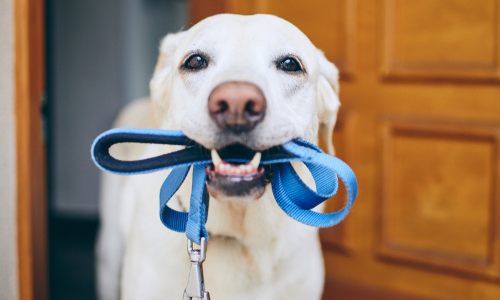
Dog holding leash

Making Walks with Your Dog More Enjoyable

You've probably heard people joke, "Are you walking your dog, or is your dog walking you?" In fact, your dog might actually be controlling the walk if it never received any leash training. An untrained dog may pull on the leash or try to dash off to chase a squirrel while you struggle to hold on to the leash. Fortunately, these problems can usually be corrected with a little training.

How Training Makes Walking Your Dog Easier

Just like children, dogs don't innately understand the rules of social conduct when they're born. With gentle corrections and explanations, kids soon learn not to touch the stove or grab a toy out of the hands of a sibling. Dogs also need a little help to understand what you expect of them.

During leash training sessions, your dog will learn how to walk calmly at your side without pulling or sniffing every patch of grass along the way.

What You Can Do About Pulling

Walks can be stressful if you don't feel that you're in control of your dog. Unfortunately, stress isn't the only issue if your furry friend pulls on the leash. Pulling can increase your risk of falls and injuries ranging from strains and sprains to fractures. If you're older and have started walking your dog as a way to stay healthy, avoiding pulling is particularly important.

Researchers at Penn Medicine discovered that fractures related to dog walking doubled in patients 65 and older between 2004 and 2017. Hip, arm, wrist, finger, hand, and shoulder fractures were the types of breaks most commonly reported.

When your dog begins to pull, one of these methods recommended by Rover.com may be helpful:

  • Make an About Turn. Change directions once your dog reaches the end of the leash and you notice a slight strain on the leash. When your dog changes direction with you, offer a treat or word of praise.
  • Don't Move. Stop moving as soon as your dog begins pulling on the leash. Once the dog stops pulling, start walking again. Constantly repeating this action will teach your dog that walks won't continue until the pulling stops.
  • Try a Harness: A no-pull harness may be an effective option if your dog still pulls. Gentle pressure placed on the chest or legs reminds your dog not to strain against the leash.

When you work on training your dog to walk properly on a leash, keep these things in mind:

  • Positive Reinforcement Is the Best Choice. Training sessions that use praise and rewards as incentives are most effective. If your dog knows that doing what you want will result in a treat or praise, it will be much more likely to follow the rules you've established.
  • Patience Is a Must. Your dog probably won't master walking on a leash after just one training session. In fact, you may need to spend a few weeks or months helping your dog learn the ins and outs of leash walking.
  • Try Some Pre-Walk Exercise. Walking calmly on a leash may be difficult if your dog has been cooped up in the house all day. Help your pooch expend that excess energy by throwing a ball or flying disc in the backyard for 20 minutes before you start your walk.
  • Don't Use a Retractable Leash When Training Your Dog. Retractable leashes may only reinforce pulling behavior. Every time your dog pulls, the leash unwinds a little more, teaching your dog that pulling gets results.
  • Consider Obedience Training. During obedience training, you'll learn how to teach your dog commands and also practice how to walk on a leash. Commands are particularly important when walking on a leash. For example, when you say, "leave it," your dog will know it's time to stop sniffing an aromatic patch of urine-scented grass or ignore a squirrel. The "slow" command tells your pet to slow down, which will reduce leash pulling.

Walk Your Pet Month, observed every January, is an excellent time to work on leash skills. Learning how to walk on a leash will make walks more pleasant and help your pet avoid injuries from cars and other animals. If your pet does become injured or develops a health issue, let us know. We'll schedule a convenient appointment to examine your dog and discuss your concerns.

Sources:

Penn Medicine News: Bone Fractures Increasing as Seniors Walk Dogs to Stay Active, 3/6/19

American Kennel Club: 3 Ways You Might Be Ruining Your Dog’s Walk, 7/28/19

Rover.com Have You Been Walking Your Dog Wrong This Whole Time?

Dog Time: Good Leash Behavior: How To Train Your Puppy Or Dog To Walk On A Leash
  • Pet Health
    • Chronic Conditions
    • Digestive and Oral Health
    • Diseases and Viruses
    • Pests and Parasites
    • Orthopedics
  • Today's Veterinarian
  • Choosing Your Pet
    • Finding Your Pet
    • Cats
    • Dogs
    • Exotics
      • Amphibians
      • Birds
      • Reptiles
        • Lizards
        • Turtles
    • Small Mammals
      • Ferrets
      • Rabbits
      • Domesticated Animals
        • Prairie Dogs
      • Pocket Pets
        • Chinchillas
        • Guinea Pigs
        • Hamsters
        • Hedgehogs
        • Rats
    • Livestock
      • Cows
      • Donkeys, Horses & Mules
      • Goats
      • Pigs
      • Poultry
      • Sheep
  • Living With Your Pet
    • Bringing Your Pet Home
    • Children and Pets
    • Providing Care
    • Travel
    • Saying Goodbye
  • Newsletter Library
    • Cats
    • Tips for Pet Owners
    • Behavior & Training
    • Fleas & Parasites
    • Keeping Pets Healthy
    • Recognizing Illness
    • Nutrition & Food
    • Pet Dangers
    • Seasonal Topics
    • Visiting the Vet
    • Equine
    • Newsletter Archive
      • Fun with Pets
      • Unbelievable Pets
  • Video Newsroom
    • Health Topics
    • Technology and Science
    • Other Interests
  • Newsletter Library
  • Client Survey
  • Pets4Kids

Covid-19 Information

Featured Links

Click to find out more

  • About Us

    Hilltop Veterinary Clinic is proud to serve the Whitecourt Alberta area for everything pet related. Our veterinary clinic and animal hospital is run by licensed, experienced veterinarians.

  • Facebook

    Find us on Facebook!

  • Contact Us

    Please contact with any questions or to request an appointment.

Office Hours

Our Regular Schedule

Monday:

8:30 am-5:00 pm

Tuesday:

8:30 am-5:00 pm

Wednesday:

8:30 am-5:00 pm

Thursday:

8:30 am-5:00 pm

Friday:

8:30 am-5:00 pm

Saturday:

Mayerthorpe Office Only

9:00 am-1:00 pm

Sunday:

Closed

Location

Find us on the map

Featured Articles

Read about interesting topics

  • March Newsletter: How to Keep Your Cat Safe When Outdoors

    Wondering how your cat can safely spend time outdoors? ...

    Read More
  • March Newsletter: How to Choose Safe Blankets for Pets

    Do you know how to pick a safe blanket for your pet? ...

    Read More
  • February Newsletter: How to Reduce Dental Anxiety in Pets

    Does your pet hate toothbrushing? These tips could reduce dental anxiety. ...

    Read More
  • February Newsletter: How to Safely Change Your Cat’s Food

    Buying a new food for your cat? Find out how to switch foods safely. ...

    Read More
  • January Newsletter: Signs Your Pet Needs a Wellness Exam

    Does your pet need a wellness exam? ...

    Read More
  • January Newsletter: How Your Veterinarian Can Help If Your Pet Ingests Something Toxic

    Has your pet eaten something it shouldn't have? Find out how your vet can help. ...

    Read More
  • December Newsletter: Signs Your Pet Needs a Professional Cleaning

    Do you know when your pet needs a professional cleaning? ...

    Read More
  • December Newsletter: Simple Ways to Keep Your Home Flea-Free for Your Pet’s Well-being

    Never want to see another flea again? Try these tips for a flea-free home. ...

    Read More
  • November Newsletter: The Importance of Bloodwork for Your Pet’s Health

    Wondering if your pet really needs bloodwork? Find out the benefits of blood tests for your furry friend. ...

    Read More
  • November Newsletter: Turkey Day Tips for Pet Owners

    Don't forget about your pet when making Turkey Day preparations. ...

    Read More

Newsletter Signup

No social media links found. Please configure it
  • Copyright © 2026 MH Sub I, LLC dba iMatrix.
  • Admin Log In
  • Site Map