Hilltop Veterinary Clinic

780-778-2662

Open mobile navigation
  • Home
  • Patient Resources
    • Small Animal
      • Nutrition
      • Breeding and Whelping
      • Kitten Info
      • Puppy Info
      • Geriatric Care
      • Surgical Info
      • Tattoos and Microchips
      • Euthanasia and Pet Memorials
      • Travelling with Pets
    • Equine
      • Wellness Care
      • Coggins Testing and Export
      • Referral Info
      • Euthanasia
      • Resources
      • Emergency Services
    • Bovine
      • Farm Services
      • VCPR and Herd Health
      • Vaccinations and Deworming
      • Exportation and EU Certification
      • Bovine Resources
    • Small Ruminant and Camelid
      • Herd/Flock Health and VCPR
      • Vaccinations
      • Deworming
    • Exotic and Pocket Pets
      • Euthanasia and Pet Memorials
      • Referral Info
      • Resources
    • What to Expect
    • Veterinary Resources
    • Payment Options
  • About Us
    • Clinic Tour
    • Meet The Staff
    • Service Overview
    • No-Show Policy
  • Services
    • Small Animal
      • Spays and Neuters
      • Vaccinations
      • Soft Tissue Surgery
      • Orthopedic Surgery
      • Dentistry
      • Laser Therapy
    • Bovine
    • Equine
    • Onsite diagnostics
    • Small Ruminant and Camelid
    • Cervid and Bison
    • Other Species
    • Emergency Services
  • Contact Us
  • Veterinary Topics
    • Pet Health
      • Chronic Conditions
      • Digestive and Oral Health
      • Diseases and Viruses
      • Pests and Parasites
      • Orthopedics
    • Today's Veterinarian
    • Choosing Your Pet
      • Finding Your Pet
      • Cats
      • Dogs
      • Exotics
        • Amphibians
        • Birds
        • Reptiles
          • Lizards
          • Turtles
      • Small Mammals
        • Ferrets
        • Rabbits
        • Domesticated Animals
          • Prairie Dogs
        • Pocket Pets
          • Chinchillas
          • Guinea Pigs
          • Hamsters
          • Hedgehogs
          • Rats
      • Livestock
        • Cows
        • Donkeys, Horses & Mules
        • Goats
        • Pigs
        • Poultry
        • Sheep
    • Living With Your Pet
      • Bringing Your Pet Home
      • Children and Pets
      • Providing Care
      • Travel
      • Saying Goodbye
    • Newsletter Library
      • Cats
      • Tips for Pet Owners
      • Behavior & Training
      • Fleas & Parasites
      • Keeping Pets Healthy
      • Recognizing Illness
      • Nutrition & Food
      • Pet Dangers
      • Seasonal Topics
      • Visiting the Vet
      • Equine
      • Newsletter Archive
        • Fun with Pets
        • Unbelievable Pets
    • Video Newsroom
      • Health Topics
      • Technology and Science
      • Other Interests
    • Newsletter Library
    • Client Survey
    • Pets4Kids
  • Home >
  • Articles >
  • Newsletter Library >
  • May Newsletter: Items That Should Be Included in Your Pet's First Aid Kit

May Newsletter: Items That Should Be Included in Your Pet's First Aid Kit

  • Created in Newsletter Library

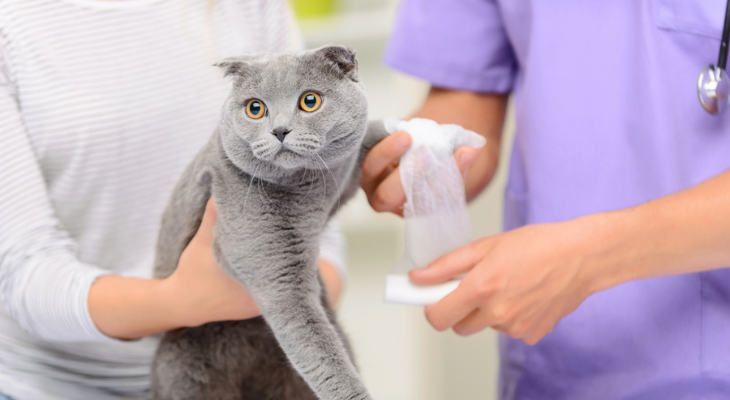
Gray cat has his paw bandaged.

Is Your Pet's First Aid Kit Fully Stocked?

You never know when an accident or health emergency may happen when you have a pet. Keeping a first aid kit fully stocked will ensure you're ready if trouble strikes.

What Should I Include in the First Aid Kit?

Add these essentials to your pet's first aid kit:

  • Antiseptic Wipes. Use the wipes to remove dirt, debris, and germs from wounds.
  • Bandages and Gauze. Buy gauze pads and non-adhesive bandages in a variety of sizes to cover and protect wounds.
  • Adhesive Tape. Adhesive tape keeps bandages in place but may pull on hair when removing.
  • Compression Bandages. Compression bandages hold wound coverings in place and don't stick to your pet's hair. Buy compression bandages or wraps specifically intended for use on pets.
  • Antiseptic Gel, Spray, or Cream. Applying antiseptic gel, spray, and cream to a wound before bandaging helps by reducing the risk of infection.
  • Tick Remover. Removing ticks promptly can reduce your pet's risk for Lyme disease and other tick-borne illnesses. According to The Humane Society of the United States, it takes a day or two for a tick to transmit an infection to your pet. The sooner you remove the tick with a tick remover, the better.
  • Tweezers. Tweezers can be handy for removing splinters, foreign objects, bee stingers, and ticks (if you don't have a tick remover).
  • Muzzle. A severe injury or illness can make your normally calm pet agitated and aggressive. Using a muzzle helps you avoid bites. Make sure the muzzle fits your pet comfortably and doesn't interfere with breathing.
  • Saline. Saline spray or solution can be used to flush away debris from your pet's eyes or clean a wound.
  • Towel. A towel can double as a splint or sling in an emergency or keep your pet warm.
  • Gloves. Latex gloves keep your hands clean and reduce the risk of wound contamination.
  • Styptic Powder or Pen. Styptic powder stops bleeding from a torn nail.
  • Nail Clippers. Clippers prevent a ragged or torn nail from snagging on objects and worsening the injury.
  • Bandanas. Soak a bandana in cool water and place it on your pet to ease heat exhaustion symptoms. Heat exhaustion and heatstroke symptoms include excessive drooling or panting, dry nose, sunken eyes, fever, reduced urine output, weakness, fatigue, vomiting, diarrhea, or difficulty walking. Call your veterinarian right away if your pet experiences heat-related symptoms, as shock, dehydration, or kidney failure can occur in some cases.
  • Collapsible Water Dish. Access to water is important if your dog overheats, which can happen even if the weather isn't unusually hot. Heat exhaustion is more likely to occur in dogs that have long hair, a short nose, or are obese, ill, or dehydrated.
  • Benadryl. Benadryl can be helpful if your dog suffers an allergic reaction. Don't give Benadryl unless you've checked with a veterinarian first and know how much medication is safe for your pet. The American Kennel Club recommends avoiding liquid Benadryl because of the salt content and advises against the use of time-release capsules. Dogs don't absorb medication in the capsules the same way as people, which can affect dosage.
  • Oral Syringe. Use the oral syringe to give your pet liquid medication.
  • Instant Cold Packs. These packs become cold with a quick squeeze and ease pain, inflammation, and swelling.
  • Thermometer. A thermometer eliminates the guess work if you're not sure if your dog has a fever.
  • Scissors. A small pair of blunt-tipped scissors is invaluable in cutting a length of adhesive tape, trimming hair around a wound, or opening wound care packaging.
  • Flashlight. Emergencies don't just happen during the day. A flashlight makes it easier to examine injuries in dark and dimly lit conditions.
  • Emergency Telephone Numbers. Keep a list of your veterinarian's phone number, the number for 24-hour emergency veterinary hospitals, poison control, and other important numbers.
  • Records. It's easy to forget a few details when you're dealing with an emergency. When you keep a written record of your pet's medications and health conditions in your first aid kit, you won't have to worry about a momentary memory lapse.

Does your dog have an injury or illness? Give us a call if your furry friend needs veterinary care.

Sources:

The Humane Society of the United States: What to Do if You Find a Tick on Your Dog

https://www.humanesociety.org/resources/what-do-if-you-find-tick-your-dog

American Kennel Club: Benadryl for Dogs, 3/14/2024

https://www.akc.org/expert-advice/health/benadryl-for-dogs/

American Veterinary Medical Association: First Aid Tips for Pet Owners

https://www.avma.org/resources-tools/pet-owners/emergencycare/first-aid-tips-pet-owners

Outside Magazine: The Ultimate Dog First-Aid Kit, 8/23/2023

https://www.outsideonline.com/health/wellness/dog-first-aid-kit/

ASPCA Pro: How to Make a Pet First Aid Kit

https://www.aspcapro.org/resource/how-make-pet-first-aid-kit
  • Pet Health
    • Chronic Conditions
    • Digestive and Oral Health
    • Diseases and Viruses
    • Pests and Parasites
    • Orthopedics
  • Today's Veterinarian
  • Choosing Your Pet
    • Finding Your Pet
    • Cats
    • Dogs
    • Exotics
      • Amphibians
      • Birds
      • Reptiles
        • Lizards
        • Turtles
    • Small Mammals
      • Ferrets
      • Rabbits
      • Domesticated Animals
        • Prairie Dogs
      • Pocket Pets
        • Chinchillas
        • Guinea Pigs
        • Hamsters
        • Hedgehogs
        • Rats
    • Livestock
      • Cows
      • Donkeys, Horses & Mules
      • Goats
      • Pigs
      • Poultry
      • Sheep
  • Living With Your Pet
    • Bringing Your Pet Home
    • Children and Pets
    • Providing Care
    • Travel
    • Saying Goodbye
  • Newsletter Library
    • Cats
    • Tips for Pet Owners
    • Behavior & Training
    • Fleas & Parasites
    • Keeping Pets Healthy
    • Recognizing Illness
    • Nutrition & Food
    • Pet Dangers
    • Seasonal Topics
    • Visiting the Vet
    • Equine
    • Newsletter Archive
      • Fun with Pets
      • Unbelievable Pets
  • Video Newsroom
    • Health Topics
    • Technology and Science
    • Other Interests
  • Newsletter Library
  • Client Survey
  • Pets4Kids

Covid-19 Information

Featured Links

Click to find out more

  • About Us

    Hilltop Veterinary Clinic is proud to serve the Whitecourt Alberta area for everything pet related. Our veterinary clinic and animal hospital is run by licensed, experienced veterinarians.

  • Facebook

    Find us on Facebook!

  • Contact Us

    Please contact with any questions or to request an appointment.

Office Hours

Our Regular Schedule

Monday:

8:30 am-5:00 pm

Tuesday:

8:30 am-5:00 pm

Wednesday:

8:30 am-5:00 pm

Thursday:

8:30 am-5:00 pm

Friday:

8:30 am-5:00 pm

Saturday:

Mayerthorpe Office Only

9:00 am-1:00 pm

Sunday:

Closed

Location

Find us on the map

Featured Articles

Read about interesting topics

  • March Newsletter: How to Keep Your Cat Safe When Outdoors

    Wondering how your cat can safely spend time outdoors? ...

    Read More
  • March Newsletter: How to Choose Safe Blankets for Pets

    Do you know how to pick a safe blanket for your pet? ...

    Read More
  • February Newsletter: How to Reduce Dental Anxiety in Pets

    Does your pet hate toothbrushing? These tips could reduce dental anxiety. ...

    Read More
  • February Newsletter: How to Safely Change Your Cat’s Food

    Buying a new food for your cat? Find out how to switch foods safely. ...

    Read More
  • January Newsletter: Signs Your Pet Needs a Wellness Exam

    Does your pet need a wellness exam? ...

    Read More
  • January Newsletter: How Your Veterinarian Can Help If Your Pet Ingests Something Toxic

    Has your pet eaten something it shouldn't have? Find out how your vet can help. ...

    Read More
  • December Newsletter: Signs Your Pet Needs a Professional Cleaning

    Do you know when your pet needs a professional cleaning? ...

    Read More
  • December Newsletter: Simple Ways to Keep Your Home Flea-Free for Your Pet’s Well-being

    Never want to see another flea again? Try these tips for a flea-free home. ...

    Read More
  • November Newsletter: The Importance of Bloodwork for Your Pet’s Health

    Wondering if your pet really needs bloodwork? Find out the benefits of blood tests for your furry friend. ...

    Read More
  • November Newsletter: Turkey Day Tips for Pet Owners

    Don't forget about your pet when making Turkey Day preparations. ...

    Read More

Newsletter Signup

No social media links found. Please configure it
  • Copyright © 2026 MH Sub I, LLC dba iMatrix.
  • Admin Log In
  • Site Map